Popular posts

Labels

Showing posts with label Miscellaneous Musings. Show all posts

Sunday, 6 December 2020

Movember 2020: celebrating 20 years of dodgy tashes.

 This year there was a big Movember push at my school, and naturally, I was an enthusiastic participant:


Tom Selleck, did I hear you say? :-)

Slightly shocked by the amount of "salt" in my moustache, I was inspired to look back through my photo archives for pictures of my younger, darker-bearded self. And, given that my beard art article is still the most-read post on my blog, I figured it was time for another facial hair post. 

So, without further ado, let's pay tribute to 20 years' worth of manly facial hair:

2001 - late university/High-Density Beagles era:


"I have come to clean zee pool"

2002-2004 - RAAF era:


A tash was the only facial hair allowed in the RAAF, so I made the most of it.


"Demolition Man" - taken in 2002, but looks like it could be 1982...or even 1942

2008-2009 - Shanghai Second Polytechnic University era:

Poolside in Tarragona. "Como estan, ladies?"

It's amazing she married me really.

Channeling Stephen Wallace circa 1982

2015-2016 - Zhuhai International School era:

"We are the world..."

Thanksgiving 2015


Above and below: channelling my Australian Fast Bowler archetype

One of my finest sporting moments

Movember 2020 Champion?

So there you have it. A tour through 20 years' worth (almost) of dodgy tashes. 

Last week at school, the students voted for their favourite moustaches. The winner will be revealed on Monday. 

Take a look at the entries below. Which mo would you vote for? Can you tell which one is mine?


Saturday, 11 July 2020

Everyone is a guru in India, and other lessons from a yoga course


How did I end up here? Read on to find out.

My summer break in 2011 was spent doing something I didn't expect I would do again so soon, after the mixed-bag experience I'd had during my round-the-world trip of 2005-2006, and that was going back to India. Nan had been a long-time yoga enthusiast; I also had started experimenting with it even before we met, and the two of us would often go to yoga classes together in Shanghai. In addition, Nan had been wanting to get “semi-professional” about yoga for quite some time, and she figured India was the best place to do it. So, the focus of the trip was to be a one month, live-eat-breathe-and-sleep-yoga (a.k.a the 200-hour, 1 month Yoga Alliance Yoga Teacher Training certificate) course in Goa. I would have been happy enough to just head to Goa and stay there for the entire summer, but Nan insisted that since we were going to India, we at least had to see the Ganges and the Taj Mahal. What she was saying was reasonable, of course, but knowing what India could be like (and memories of the streets of Delhi, Mumbai and Chennai still fresh in my head), and knowing what my wife was like, I felt like I was damned if I did, and damned if I didn't. Nonetheless, I dutifully went ahead and booked our train tickets – Kolkata-Varanasi-Agra-Goa – in 2-tier AC sleeper, which, apart from having air-conditioning, was different to the 2nd class fan sleepers I had travelled on last time in that bedding was supplied, but had the same cockroaches.

Varanasi, as expected, was an out-of-this-world experience, and seeing the feet sticking out of the burning ghats was something I will never forget. Agra, once you got over the fact that it was touristy, went with the flow, and let the touts-cum-tuk-tuk drivers take you where they would (in exchange for free or very cheap rides), was a fun shopping and dining experience, sort of like an Indian Disneyland. I had the best Indian meal I've ever had in my life there at a place called “Pinch of Spice”; check it out if you are ever in that part of the world.

Next, after a train ride that never seemed to end (it was about a day late), we arrived at our final destination, Shri Kali Ashram, in the far south of Goa, on a quiet stretch of beach known as Galjibag. I had been worried about spending a month of my holiday in a “yoga boot camp”, up at the crack of dawn meditating, practising yoga postures all day, and memorising Sanskrit names in the evenings, but the course kept a very laid-back schedule; almost too laid-back some would say.

Being on my break from work, I was quite happy to have the downtime to be able to sit around and read books for a few hours each day, but I think Nan wanted something a little more intense. In the end, I think we both got something out of the course; our repertoire of yoga postures, range of movement and core strength improved significantly, and on the non-physical side of things, I came into contact with lots of new ideas and ways of thinking about life (particularly in the realm of Eastern religious philosophies), and enjoyed having the time to discuss and debate them with interesting people from around the globe; in fact, you could say that returning to India re-opened a “philosophy and spirituality” dialogue for me that had lain dormant since I set aside such pursuits at the end of my 2005-2006 world trip in order to focus on making money, learning Chinese and meeting women in China (and now that I've pretty much achieved those three goals, there's room in my life to go back to said dialogue – Maslow's Hierarchy of Needs, right?).

I remain firmly a skeptic and scientific thinker (don't worry, you won't see me walking around barefoot in a robe next time we meet, even though the idea of becoming a philosopher like the ancient Greek Stoic Sages does rather appeal to me); I've just become more aware in recent years that the “science vs religion” debates I used to have in my younger days were actually just “science vs Christianity” debates, and that one needs to gain an understanding of all the major world religions in order to be able to give a thorough and proper treatment of the subject. Religious implications aside, from the small amount I've read thus far, I can already see the value in studying Eastern religious philosophies, particularly Taoism, Vedanta and Buddhism, in terms of their application in reducing the stresses and anxieties of modern, “Western” lifestyles. Ideas like discovering and becoming comfortable with your “true/real/inner self”, not clinging to things and going with the flow (i.e. the way of things/nature or “The Tao”) are all useful habits to cultivate, regardless of whether you believe in reincarnation or not.

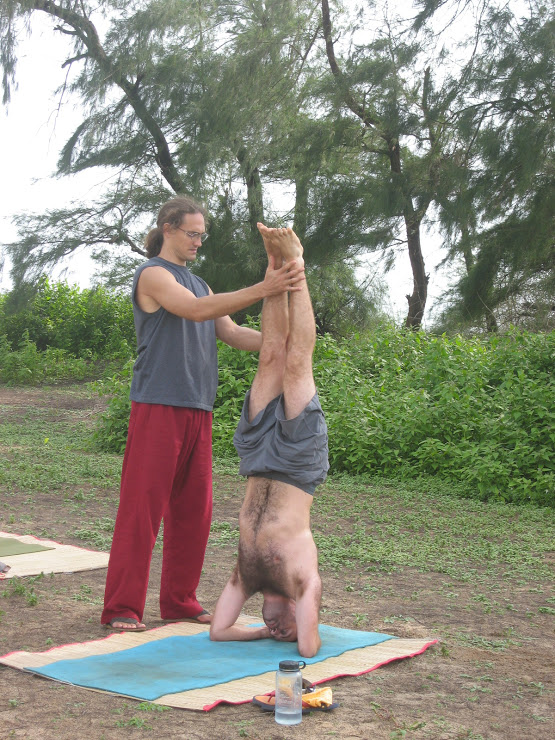
Shan, the owner and “guru” of the ashram was quite an interesting character; he used to own a shop in Australia and had moved back to India to teach yoga. He had a white moustache and ponytail and would say “and just totally relax” while wobbling his head after just about every yoga posture in the sessions he ran. He asked us to buy and read his book “Divine Initiation” as part of the course. Although I didn’t always appreciate Shan’s criticisms of my “mechanical worldview”, I patiently slogged through the book, but I think anyone who knows me will only need to read the first paragraph on the book’s page linked above to see that it’s not the kind of book I would usually read. Obviously, I never tried reading it backwards :-)

Finally, to capture the essence of the title of this post, I think my 2006 self summed it up perfectly in my travel diary from my round-the-world adventures:

“The alternative traveller scene is alive and well here also - everywhere you looked you could see ads for yoga, reiki healing, ayurvedic massage, brown bread, yak cheese and organic vegetables, and of course Bob Marley is back on the playlist in most places I eat. Rickety (almost dangerously so), wooden businesses constructed in a week and dismantled every monsoon, dodgy cops being paid off so said businesses can stay open after 11:30pm, and cows sunning themselves on the beach remind you that you are in India. But I think what has been most interesting about Goa (and India in general) has been the fascinating characters I have met among my fellow travellers - for example, washed out Ozzy Osbourne and John English types seem to feature heavily here. One such character was a 54-year-old mechanic and boat builder from Birmingham, who was single and beginning his 3rd winter cruising around India on a motorbike. Every time I ran into him he seemed to bring the conversation round to an analogy from the same story about the time he travelled as a mechanic in a hippy bus, overland from Birmingham to Goa in 1978, through Iran, Afghanistan and other such now almost unthinkable places. Nice guy, but every time he started telling the story he reminded me of that old roadie "Del" from the movie "Wayne's World 2", who would always tell the young crew members the story about beating the tiger to death with its own shoes. Or take for example "Bapu", the 53-year-old astrologer and druid from Yorkshire, who believed he was a member of the court of King Arthur. Another old man, who my fellow backpackers and I have dubbed "God", due to his long flowing white hair and beard, can be seen power walking up and down the beach in his speedos every afternoon at about 4 o'clock. I think he would make a great billboard advertisement for Goa - it would say something like "Goa - God's country" or "where even God goes on holiday". Then there is another man, nameless as yet but best described as a skinny version of Fabio, who walks about all day in only his Y-fronts. Even when he eats in restaurants. And last but not least, there is "Gosh", an original Goa hippy who wears only a loincloth, lives in a cave at one end of the beach and meditates most of the day (and charges 500 rupees per hour for consultations). Yes, there certainly are a lot of people finding themselves here in Goa - and judging from these wise old characters it seems that the meaning of life has something to do with wearing as little as possible.”

Let’s just say that if I’d met Shan during that trip, he probably would have featured in the paragraph above - although to his credit, he was usually fully clothed!

I’ll finish by letting some pictures from the trip (complete with witty captions, of course) tell the rest of the story.


The chaos in Kolkata Station was an assault on the senses after having landed a few hours earlier.


Care for a dip anyone? Locals bathing in the River Ganges.


Many families in Varanasi kept cows in their courtyards.
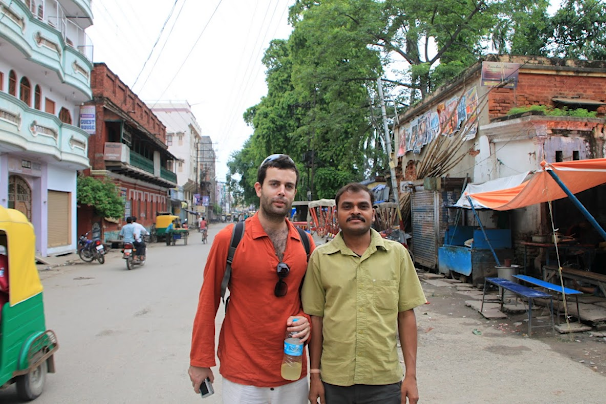

With our "self-appointed" Varanasi guide.


"Did Mark Waugh really wear these sunglasses during the 1994 Ashes series?"


What's that in the background I wonder?


A cheeky monkey, Agra Fort.


The money shot.


Attempting to prove that we didn't photoshop ourselves into the previous picture.


Typical Agra street scene.


Slogging my way through "Divine Initiation".


Yoga and whisky don't mix folks (note the can of tuna that I'd smuggled in due to the Ashram serving only vegetarian food).


Nan models one of the many saris that she bought during the trip.


Leading my first yoga session.


Setting up for our daily afternoon beachside yoga practice.


Discussing the finer points of Vedantic philosophy with my classmates over whisky and soda.


Officer's Choice Premium Whisky - an alternative path to enlightenment perhaps?

“The Master does nothing, yet leaves nothing undone” - Lao Tzu

“The sage is a target to aim at, even though you fail to hit it. The sage is to Stoicism as Buddha is to Buddhism. Most Buddhists can never hope to become as enlightened as Buddha, but nevertheless, reflecting on Buddha's perfection can help them gain a degree of enlightenment.” - Derek Sivers, paraphrasing William Irvine’s “A Guide to the Good Life - the ancient art of Stoic Joy”.

Sunday, 10 May 2020

On funk and the cosmos

This post is dedicated to defining, explaining and exploring the term “cosmic funk” - or at least what it means to me, and how funk music and all things cosmic have become a kind of de facto spirituality for me. 

The notion of salvation through music in my psyche probably dates back to when my teenage mind was first exposed to the future scene from Bill and Ted’s Excellent Adventure:

 
Future enlightened dudes as depicted in Bill and Ted's Excellent Adventure (1989)

The first line in the Wikipedia plot summary reads “In 2688, humanity exists as a utopian society due to the inspiration of the music and wisdom of the Two Great Ones, Bill S. Preston, Esq. and Ted "Theodore" Logan.” Of course Bill and Ted were more about heavy metal than funk, but the connection between music, enlightenment and its potential to positively affect society was first suggested to me by that movie, I think.

I first started using the term "cosmic funk" around 2008, while I was crafting my Couchsurfing profile. The first hint comes with the up-front mission statement, “To facilitate the arrival of The Bright Green Mothership in East Asia”, but the specific term is used further down in the profile when describing my music collection. Moreover, you can see hints of a secular philosophy centered around groove and the cosmos throughout the page, particularly in my description of my 2005 encounter with George Clinton from Parliament Funkadelic.

Searching my Gmail for the term “cosmic funk” returned the following email from 2009, an invitation to a cosmic funk-themed 30th birthday party. The list of suggested artists provides further clues as to the precise definition of the term:

Hey guys!
Great news - now there are not one, but two awesome parties to choose from! The Mackay Mexican Fiesta is still happening this Saturday (see email below), but for those of you near Brisbane who can't make it, I'm having another bash in Brisbane on the 22nd (my actual birthday), which my brother and his housemates have kindly agreed to host.
Here are the details:
Where: 41 Jones St, Auchenflower, Brisbane
When: Tuesday 22nd September, from 1930 onwards
Theme: Cosmic Funk - think Boney M, Parliament Funkadelic, Moonraker, the Star Wars Disco theme, Jamiroquai, etc - come on board the Mothership and shake that sacro-iliac!
Ok, you don't actually have to dress up, but please do stop by for a beer. I'll be buying a few cartons, but if you want to do some serious drinking, bring something to supplement.
Catch you soon,
Benson

Cosmic funk is probably best defined by lyrics of the song “Mothership Connection” and the whole Parliament Funkadelic mythology, which I’ve already written about in this Facebook post.

If you haven’t read it yet, the key cosmic funk and P-funk Mythology-defining phrase is this one:
"Funk upon a time, in the days of the Funkapus, the concept of specially-designed Afronauts capable of funkatizing galaxies was first laid on man-child"

Mind not sufficiently blown yet? Read on...
One of my favourite P-Funk quotes. It works on so many levels!

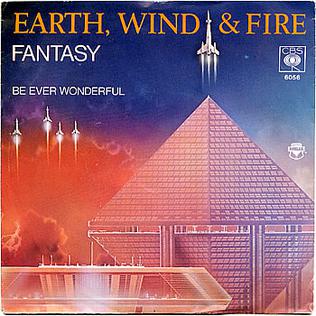
Second only to the P-Funk Mothership concept in terms of ability to epitomise the cosmic funk philosophy would be Earth Wind and Fire, whose album artwork and lyrics were littered with cosmic enlightenment themes:

“Take a ride in the sky, on our ship fantasii”

Eric Carlson recently wrote an article on “The Cosmic Joy of Earth Wind and Fire”, which suggests that bassist Maurice White might have preempted Bill and Ted by a decade or two. He writes:
“During this time, White began to have dreams, profound visions where he communed with the Creator of the universe and received orders to create a group that spread peace and joy around the planet. These visions would eventually lead The Salty Peppers to transform into Earth, Wind, & Fire, the cosmic messengers of funk ecstasy that everyone knows today.”

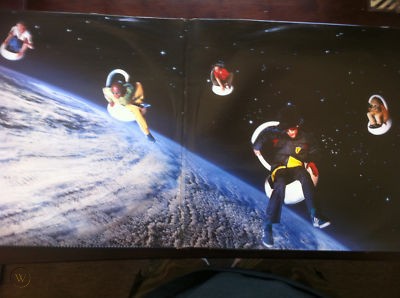
Earth Wind and Fire, the cosmic messengers of funk ecstasy (Let’s Groove, 1981)

Here’s a more obscure example that my friend Graham Coglan introduced to me during our Shanghai teaching days. It’s a song called “UFOs” from an album named “Cosmic Truth” - cosmic funk doesn’t get much purer than that!

And of course this one from War is another cosmic funk classic. Futuristic space-themed lyrics? Check. Irresistible funk groove? Check. 

There’s another more recent example of a cosmic funk messenger who deserves a mention in this article, and that is of course Jamiroquai.

Jay Kay and his band “in orbit” in the liner notes of Travelling Without Moving (I found the image here; I do actually own this album but the liner notes are somewhere in a box at my parents’ house)

Apart from tracks with space-age names like Space Cowboy, Cosmic Girl and Light Years, there’s this gem from Funk Odyssey 2001. Listen for the futuristic synth sounds in the intro and again, note the connection between cosmic themes and enlightened states.

Also note how the album cover resembles the Stargate scene from A Space Odyssey 2001:

Then there’s the 2006 track “Starchild”, which doesn’t directly mention space travel in its lyrics, but does hint at the idea of the Starchild as some kind of saviour or messenger. I’ll let you listen to it and draw your own conclusions :-)

So while we’re on the subject of A Space Odyssey 2001 and the Starchild, let’s watch that ending again.

Stanley Kubrick’s depiction of the Starchild was very different to George Clinton’s.

You’d be forgiven for thinking this is all starting to sound a bit new age, and you’d probably be right. Many of the ideas about “lightworkers” and “star seeds” are reflected in the lyrics of songs that you’d put in the cosmic funk genre. That doesn’t mean that I’m suggesting you take them literally of course!

Notice in the article about lightworkers that one of the 11 types is called “The Messenger”. I’d suggest that purveyors of cosmic funk warrant their own sub-category: the Funk Messenger. 
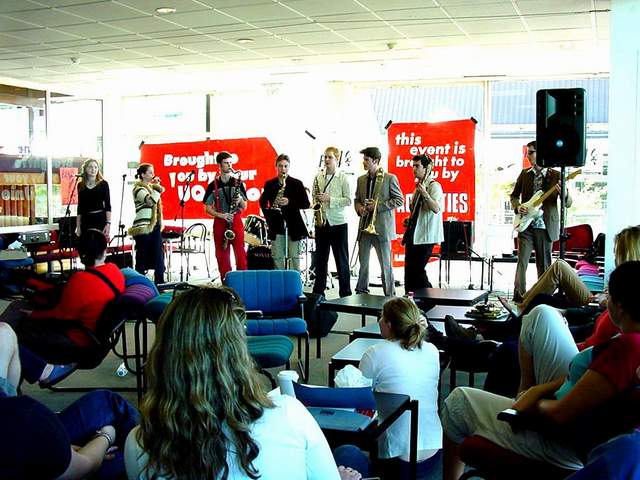
In September 2000, when my student funk outfit “High Density Beagles” made it to the finals of the University of Queensland Student Union Battle of the Bands, I thought I was going to be like Bill and Ted; destined for greatness. I was having similar visions of grandeur to Maurice White from Earth Wind and Fire. I thought I was going to save the world with my music (in other words, all three of the original songs we’d written at that point).

At the heats of the UQ Union Band Competition circa September 2000. The crowd goes wild.

Now, I realise I’m not going to be the Funk Messiah. I am not the Starchild. But am I a Funk Messenger? Perhaps, although you could argue that I need to be performing funk to larger audiences to be put into that category. Can I call myself a funk disciple? A funk soldier? Absolutely! Anyone can be one of those if they have the right mindset.

So to finish where I started - with the claim that cosmic funk can be a form of spirituality - I think if you see spirituality as anything that helps people find meaning in life and achieve transcendental mental states, then it certainly can. 

Analysing the “cosmic” and the “funk” aspects separately, this is how I see it:

Cosmic - this is both a world view and a sense of connection with the greater whole. It’s the idea that there are infinite possibilities in an infinite universe (see David Deutsche’s TED talk for a great discussion of this idea), and the hopeful future represented by space exploration and evolving into (or learning from) more enlightened and intelligent beings.

Funk - perhaps this is the meditative aspect. I see funky grooves as mantras that allow us to transcend our everyday mental state. You know that feeling you get when a certain song hits you right in “there”? This is related to George Clinton’s quote above. Free your mind...

To summarise, we don’t need to wait for the coming of the Starchild - we are the Starchild. We just need to undergo a metamorphosis. For more on what that means (that would be a whole new post), look up Daniel Schmachtenberger, particularly this podcast and this article
Perhaps it’s a stretch to say that funk can help you become enlightened and make the world a better place. What I can say for sure is it’s been a great source of positivity and psychotherapy for me over the years. So give it a try. And just maybe, if we all do it, the outline of the Starchild will begin to emerge...

Sunday, 26 April 2020

On the 80/20 rule, production efficiency and the art of bodging


I've been thinking a lot about the 80/20 rule lately, and how it relates to the "S curve". You know, how once you reach of the top of the curve where it starts to flatten out, it's not worth your while pushing to make that last 20% perfect. 

A student of mine recently came to me for advice on writing his end of high school maths exploration paper on learning curves, and our conversation reminded me of this post from the blog of one of my favourite books of all time, "Early Retirement Extreme" (ERE) by Jacob Lund Fisker. The key takeaway from the post is that you want to spend most of your time in the middle of the curve, where the curve is the steepest and you get the most improvement in outcome (y-axis) per unit of "effort" (x-axis). This would seem to be an argument for getting pretty good at lots of things, rather than trying to be the best at one thing - at least if maximising return on effort is an axiom you subscribe to.

This is closely related to the book's discussion about the art of bodging or "improvising a working solution using whatever is on hand" as an optimisation strategy. Many readers will note the similarity of this definition to the one for the verb "to MacGyver". The two terms can usually be used interchangeably, although I'd suggest that while "MacGyvering" is usually done to solve an urgent problem or prevent a catastrophe, "bodging" is usually undertaken with the aim of saving money and/or avoiding having to buy a solution. This site suggests that MacGyver is used in US English, while bodging is a British English term. 

I just put this picture of MacGyver wearing aviators here to get you to click on it. 

I discovered Fisker's book in late 2012, and it's had a massive impact on the way I think. This book review on Wise Bread is a good summary if you have the time and inclination, but the 50000-foot summary is that being a consumer is a choice, and that it's possible to live off a fraction of what you earn, if you're willing to make the necessary lifestyle adjustments. The reason most people don't "retire" (read: reach a point where the income earned from your assets exceeds your expenses; this doesn't necessarily refer to retirement in the traditional sense of golf and cruise ship vacations) extremely early is because reducing your expenses to that level requires some extreme measures!

Of course, desired retirement income and desired level of comfort and lifestyle expenses all exist on sliding scales, so it's possible to get a lot out of the book without needing to be a hardcore minimalist who walks everywhere, takes cold showers and buys socks all of the same kind so they never have to deal with mismatching pairs (all of which are approaches suggested by Fisker in the book).

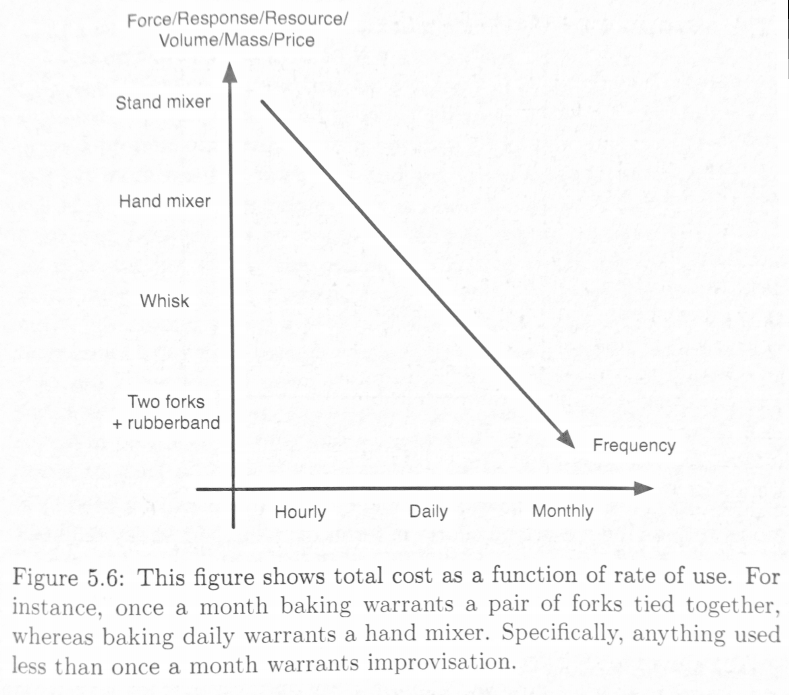
So while the book does have many examples of strategies and tactics that many would consider ridiculously extreme (and that would ruin most marriages, mine included), it's also full of gold, and is littered with hilarious, tongue-in-cheek figures and diagrams that look like they belong in a science or mathematics journal article, like this one from the section on bodging:

(Fisker, 2009)

Some representative quotes from the book include the following:

"The most effective option to save money on clothing clearly is not to buy any."
"You wouldn’t toss a pet either just because you lost interest or found something cuter, right? Ownership implies responsibility: You were responsible for digging raw resources out of the ground and now you’re responsible for getting the maximum use out of the object."
and
"I recommend getting rid of all the weird things in your cupboard. The best way is to not buy anything until your last strange ingredient is gone. Just imagine that there was an earthquake and the stores were closed for a week. How would you do?"

I was inspired to try out that last suggestion recently when our apartment complex was put under a 14-day lockdown as part of Covid-19 control measures. I lasted nearly a week until I ran out of milk. I had the brilliant idea of improvising some coffee with butter and salt that I'd heard about during a recent trip to Ethiopia. It tasted like the Vegemite soup that my mum used to give us when we were sick. I gave up and phoned for delivery.

Further investigation online revealed that you need a blender to make butter coffee properly, which got me thinking about the line on the above graph. I wasn't about to go and order an industrial blender just so I could make myself the occasional butter coffee, but there have been examples of actions that I've found myself doing more often during social distancing (read: while spending more time in my apartment), such as grinding coffee beans, filling up the ice cube tray, and hoiking those really heavy 20L water bottles onto the water dispenser, that have made me contemplate moving upwards and left on the line - maybe I should get an espresso machine? A water filter? Upgrade my fridge to one with an inbuilt ice cube maker? But then I look at that quote about tossing a pet (from the list above, which is one of many ERE quotes on my wall, by the way) and start having second thoughts. 

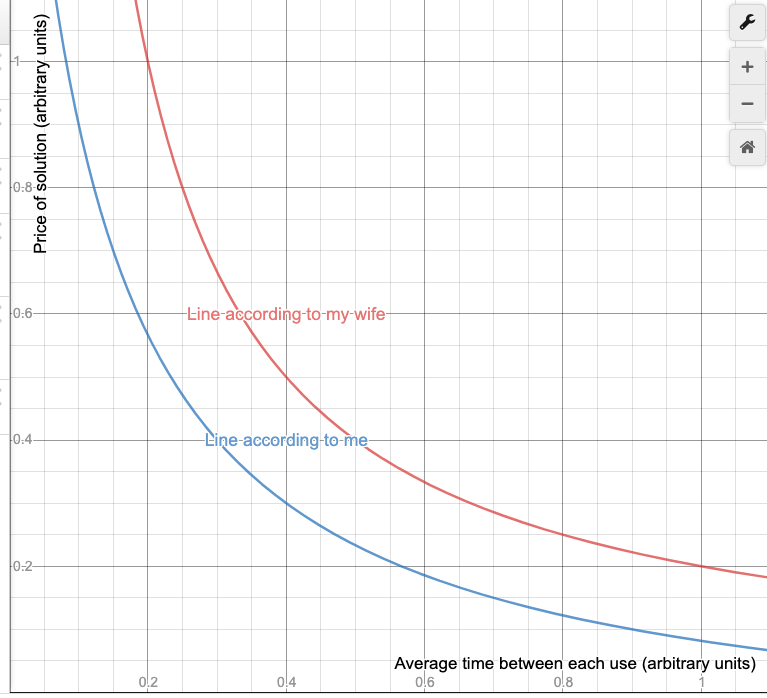
Fisker suggests that skill can shift the line down and to the left, but I'd also suggest that where the line lies for you is also a function of your attitude towards consumerism and sustainability and how much you value your time and labour at. For example, if we compared the lines for me and my wife on the matter of, say, what kind of coffee making device to own, they'd look something like this:

Figure 1: price of solution as a function of the reciprocal of use frequency, generalised with arbitrary units (produced by the author in Desmos, 2020) (to my maths teacher colleagues and IB maths students, excuse the screenshot - I couldn't get the labels to display when using the export feature)

For me, daily coffee-making warrants owning a plunger, whereas for my wife it justifies an espresso machine :-) 

Thinking about the physical interpretation of the x-axis units, we can modify the graph to be more intuitive and reflective of reality: "reciprocal of frequency of use" can be interpreted as "average time between uses", which can approach both zero and infinity but never reach either. This suggests that a reciprocal function might be a more appropriate model, with the expenditure level justified by the frequency of use approaching zero as the time between uses approaches infinity, and very high expenditures being justified for (almost) continuous use:

Figure 2: modified version of Fisker's 2009 model to account for asymptotic behaviour at very high and very low values of use frequency (produced by the author in Desmos, 2020)

What about you? Where does your line or curve lie on the spectrum? What are some examples of solutions you've improvised or "bodged" because you didn't want to buy something you weren't going to use very often? Share your stories in the comments! 

Sunday, 19 April 2020

Anything, Anywhere, Anytime - the effect of the late 90s Goodies cult in Australia on the revival of retro 70s funk culture


When I posted about relaunching this blog a month or so ago, I got a request for a Goodies post. As it turns out, just as I was creating a hyperlink to a web page that would explain the connection between The Goodies and the phrase "Anything, Anywhere, Anytime" last Saturday, Tim Brooke-Taylor was literally on his death bed. When I heard the news of his passing, the decision on what to post about next was made for me. 

To explain why there was a Goodies cult in late 90s Australia, and why it's related to 70s retro music, we need to go back another decade, to the living rooms of late 80s suburban Australia. 

Back in those days, there wasn't a lot of choice in after school TV viewing options. I think we had 5 or 6 channels. Thankfully, The Afternoon Show and host James Valentine were making good choices for us. A quick look at the list of shows on the Wikipedia page reveals an all-star lineup of classic children's television, including Doctor Who, Inspector Gadget and of course, The Goodies. 

Fast forward to the late 90s, and those kids who had grown up watching The Goodies after school were now at university, and the dot.com revolution was picking up speed. It shouldn't come as too much of a surprise then, that Australian student Alison Bean would found the "The Goodies Rule-OK?" fan site while at university in Adelaide in 1995 (I love how the website still looks like it was made in 1995). 

The scene was set for the founding executive of the University of Queensland Goodies Appreciation Society to come together in 1997 at their university residence hall. I can't quite remember which came first - discovering the website or having the idea for the club - but after filing some paperwork with the student union and bodging up some t-shirts with a stencil and spraypaint, UQ GAS was born.


The newly-minted UQ Goodies Appreciation Society executive in February 1998 (the author is on the far left in a top hat).


The inspiration for the above photo (from the Goodies Wikipedia page)

Now while there was a significant Goodies fan base attending the University of Queensland at the time (for the reasons described above), at its core, the real reason for the club's existence (and many campus clubs and societies' existence, for that matter) was to see how much student union funding we could siphon off towards beer money. 

This was not just a simple matter of signing up more members and thus receiving more grant money. Naturally, grant money could not be claimed from beer receipts, so one had to think of other creative ways to "launder" it. In our case, our "core business model" was holding Goodies episode viewings and offering subsidised pizza afterwards:


A common sight after a UQ GAS gathering. Circa 1998. 

Another favourite tactic of many clubs was to hold BBQs with free or subsidised burgers. The money used to purchase the ingredients could then be claimed from your grant money allocation, and then spent on beer at a later date once the funds had cleared. These were also a good way to sign up new members - and of course, more members meant more grant money. 


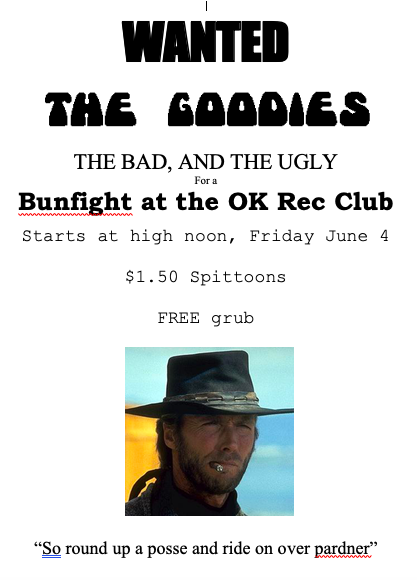
A poster for a UQ GAS BBQ giveaway, circa 1999. 

The club's membership grew rapidly during 1998, and we started getting noticed by some of the bigger, well-established clubs. Early in our second semester, the president of long-running UQ clubs and societies giant, the Chocolate Appreciation Society, approached us about holding a joint ball. The concept was a retro-themed evening featuring chocolate mud cake. A random combination, for sure, but remember what I wrote earlier about the true purpose of most clubs' existence. Suffice to say these guys were on the same page as us!


Promoting the "Murrumbidgee Mudcake Ball" at a breakfast radio event, September 1998. Yes, that is chocolate on our faces, and we are wearing pyjamas.  


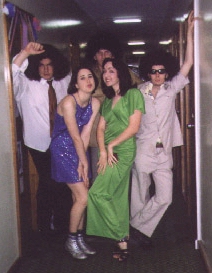
Funky Squad, ready for a big night out. 

So you're probably wondering why the 70s funk association. Well, apart from the obvious Funky Gibbon connection (this was one of their most famous songs, and Bill Oddie wrote about how it was influenced by Sly and the Family Stone in his tongue-in-cheek but slightly bitchy cover notes for the 1997 CD "Yum Yum - The Very Best of the Goodies"), true Goodies aficionados would know that the whole show was peppered with 70s funk soundtracks and ridiculously high doses of wah pedal. Just check out this version of the theme song from the mid-70s:


The music in most Goodies episodes will make any funk appreciator's face contort with pleasure. 

The bigger picture here (I think) is that The Goodies were part of a broader movement on university campuses across Australia in the late 1990s and in the underground music scenes of Australia's capital cities, in which 70s funk music styles and fashion became cool again. Perhaps it was a reaction to the teen angst-fuelling grunge music culture of the mid-90s. Or perhaps these things just go in 20-year cycles (according to this logic, Brisbane will be poised for my university funk band "High Density Beagles" to make a comeback sometime around 2037). 

 At any rate, I'm sure growing up listening to The Goodies soundtracks and The Pinball Song from Sesame Street were major contributing factors in the development of my own "Cosmic Funk" world view. But more on that in a later post :-) 

For now, I'll wrap this post up in the way that Tim Brooke-Taylor's Goodies character would have wanted it to end - with a stirring rendition of "Land of Hope and Glory":


Here's to you TBT. RIP.