We had just alighted from our bumpy ride over from the mainland on the aptly named “Thunderbolt” when we saw the sign posted in a coffee shop window:
 |
| Sit back, relax, order a latte and browse the wanted posters |
What kind of place had we just walked into? And what were we thinking dragging our suitcases around the back streets of San Pedro, Belize? Read on to find out…
FAR south of the border
For many, the proverbial “south of the border” phrase conjures up images of folks with “questionable legal status” making a run for freedom over the southern US border. Indeed, if you’ve ever been to the Tijuana-San Diego border, you’ll know exactly what I’m talking about. Its edgy, dusk-till-dawn-movie-set feel makes you want to head back north of the border before sundown.
But the border I’m referring to in this story is a long way from Tijuana - about 4000 kilometres away in fact. You’ll find it in a seldom-visited corner of the Mexican Riviera, far from the Zona Hotelera and spring break party crowds of Cancun.
 |
| Our route from Cancun to San Pedro. The border is between Chetumal and Corozal.
Note that there is no way to get from Xcalak to San Pedro - trust us, we tried! |
Cancun: Snorkelling, Micheladas and Crocodiles
The origins of our “assault on the Belize border” can probably be traced back to Cancun’s reputation as a cliche destination for “fresh off the boat” American tourists. Valuing our “off the beaten path traveller” status, the first time we landed in Cancun we put ourselves on the first bus south to Tulum. It was only after renting an Airbnb in Cancun for a week on our second trip there two years later that we discovered some of its charms (which I’ll present here now for “geographical continuity”).
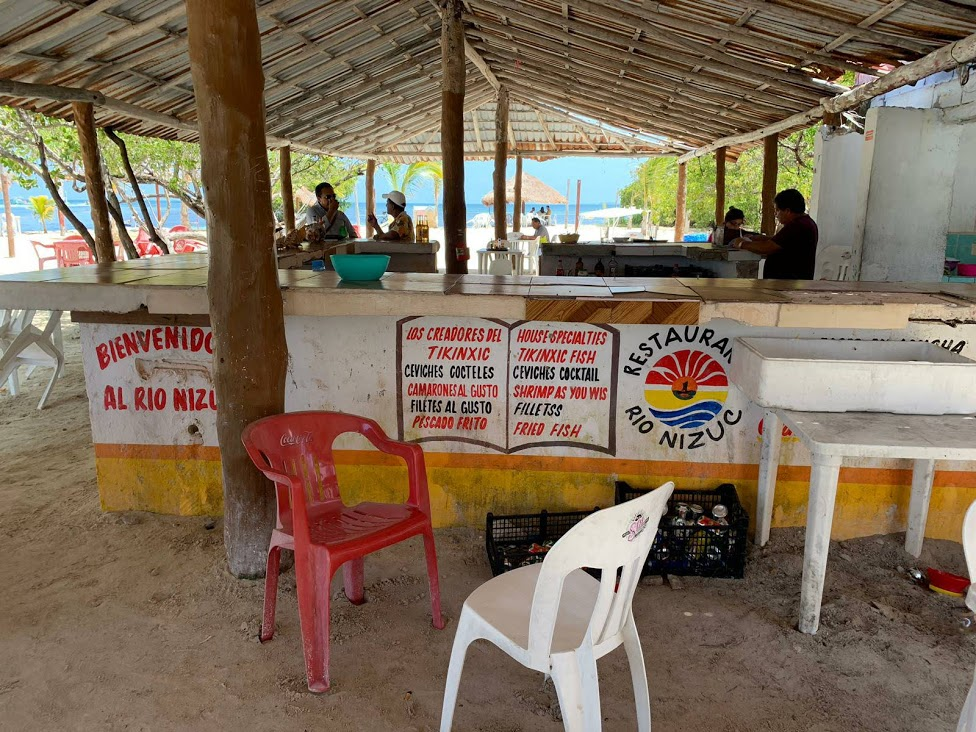 |
| You don’t have to venture far from the Zona Hotelera to find sleepy little joints like this in Cancun |
 |
| The genius thing about the Michelada is that you’re watering down your beer with tomato juice and at the same time keeping up your salt intake, so it makes for a great non-dehydrating daytime drink option. |
 |
| Best Michelada in Mexico, at Los Tarascos Cancun. “Para tacos Los Tarascos” as their slogan goes. I’d argue they should add “y Micheladas”. Although then it wouldn’t rhyme. |
 |
| View from the taco stand at Isla Blanca, a little-known peninsula north of Cancun city |
 |
| Enjoying a “boatie” (“boat beer” a portmanteau of boat and “roadie”) on the ferry to Isla Mujeres |
 |
| Quintana Roo is one of the safest parts of Mexico - you’re more likely to run into a crocodile than an armed robber. |
Pro Tip: you’ll find world-class snorkelling right off the Club Med shoreline on Punta Nizuc. Just walk in off the beach from an adjacent hotel carrying your snorkelling gear and act like you’re supposed to be there.
Trendy Tulum
Tulum, as it turned out, had already been overrun by hipsters by the time we got there in summer 2017. You’ll have to venture further south than that if you want to get off the proverbial beaten path. That said, there are many good reasons to visit Tulum and spend some time hanging out there - there’s much more to it than the seaside Mayan ruins that it's best known for. In particular, don’t miss visiting one of the many crystal-clear cenotes in the surrounding region - check out this post for more information. Also worth a visit is Parque Xel-Ha, which is a brilliant yet somewhat dangerous combination of water activities and all-you-can-eat-and-drink Mexican food and alcoholic drinks - for an entire day!
 |
| The Zona Arqueológica de Tulum - a seaside Mayan walled city with the most iguanas I've ever seen in one place |
 |
| Where else in the world can you cool off in the Caribbean Sea after wandering the ruins? |
 |
| Tulum - come for the ruins, stay for the cenotes |
 |
Chilling in a cenote whose name I don’t remember, somewhere between Tulum and Cancun. |
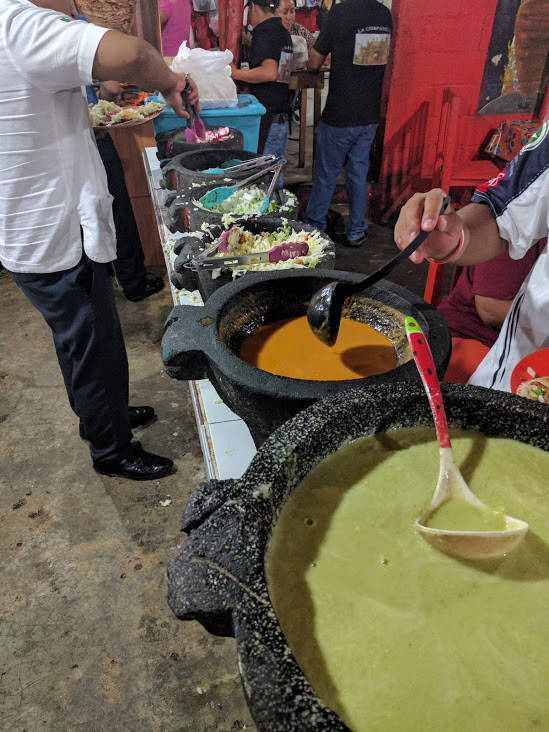 |
| Help yourself to habanero sauce and salad at Antojitos la Chiapaneca, home of the best tacos on the Mexican Riviera. |
 |
Hanging with the iguanas at Parque Xel-Ha |
Into seldom-charted waters
A further three-hour drive south of Tulum will bring you to Bacalar Lagoon. It’s like an entire lake and tributary system with cenote-like water. Here you are getting into territory where not so many gringos have been, so be prepared to dust off that high school Spanish. We did the whole trip on ADO buses, but if we did it again we would rent a car. Car rental in the Mexican Riviera is cheap (like 20 USD/day cheap), and the driving conditions (once outside Cancun centro) are pretty low stress. If you’re planning to visit a lot of swimming spots, taxis to outside-the-city-limits destinations will quickly add up.
Of course, you'll need to weigh this decision up against decreased Michelada consumption opportunities :-)
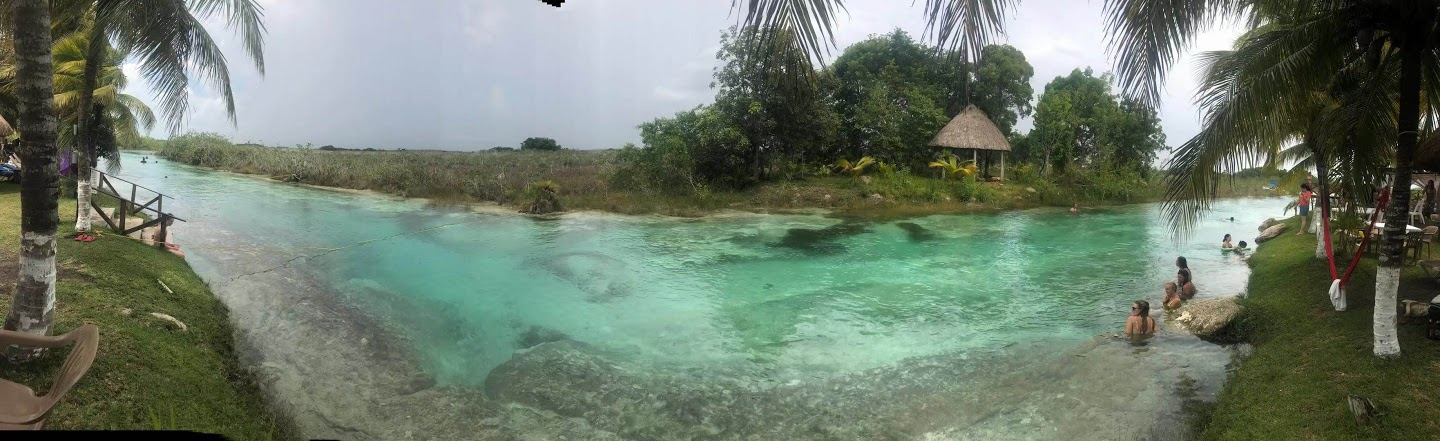
Pro Tip: while in Bacalar, don’t miss Los Rapidos Bacalar, a narrow stretch of river that feeds into the lagoon. Jump in the river up one end and float down to the other. Eat some tortillas and guacamole and grab an ice-cold cerveza from the on-site restaurant. Repeat.
 |
| Cenote Cocalitos - Tranquil swimming lagoon with fossilized stromatolites, a cenote, hammocks & an eatery.
(Source: Google Maps. Picture by author). |
 |
| Nan taking a break from floating down the river.
This picture was taken in the thatched bungalow that you can see in the picture in the link above. |
Probing the border
Now, after that little detour through the highlights of the Mexican Riviera, lets return to the theme of this post: the Mexico-Belize border region. Strictly speaking, you could count Bacalar Lagoon as part of that region as it is just 45 minutes by road from Chetumal (Mexico’s analogy of San Diego in the San Diego-Tijuana border crossing I mentioned earlier). We, however, managed to turn 45 minutes into two days by taking buses all the way to Mahahual and Xcalak - and back again (see map route above). We couldn’t find any online information that confirmed either way whether we’d be able to cross into Belize from Xcalak, so we decided to turn up and find out from the source. After all, it looked so close on the map!
Turns out we couldn’t. But that’s OK. We like to approach our border crossings slowly. With Nan’s Chinese passport, you’re never absolutely sure they’re going to let you in until they actually let you in (or you’ve applied for a visa in advance). A US tourist visa gets Chinese passport holders into most places in Central America and the Caribbean (albeit usually only for a week or two), but accurate and up-to-date information on the topic is hard to find, especially for small countries like Belize. More to the point, Belize still maintains its Chinese embassy in Taipei, not Beijing, so the odds of being rejected at the border were high. With that in mind, we decided to stay the night in Chetumal before attempting the border crossing.
No man’s land
It was the kind of border experience designed for locals doing day trips and travelling light. Think chicken buses, no English signs (on the Mexican side), constantly having to ask where to go and what to do next, and hauling your luggage across a long stretch of “no man’s land” between the exit and entry points. The details are somewhat fuzzy, but Shannon O’Donnell’s account sums it up nicely with this line:
“Rather than just following instructions mapped out in a guidebook, we were forced to hunt down a way to cross the border into Belize”
It took us most of the afternoon to find our way into Corozal on the Belizean side, so we spent an evening chatting with the salty old expats at Bay Breeze before catching the 7 am Thunderbolt to San Pedro. To sum up our Belize experience, everything was about double the price of Mexico, it felt less safe, and the beaches and food were “meh”. We promptly booked flights from Cancun to Havana, took the 3 pm boat back to the mainland the next day, and began the process of “figuring out” how to get back into Mexico.
 |
| The view from the Corozal esplanade was underwhelming after coming from Bacalar. |
 |
| All aboard the Thunderbolt! Hang onto your hat, and bring a cushion.
|
 |
| Belizean food is more Caribbean than Mexican |
 |
The beaches in San Pedro are nothing to write home about. It seems that most of the diving and snorkelling action in Belize happens on day trips to the outer reef. |
So there you have it, that’s how we ended up in a coffee shop in San Pedro, Belize browsing most-wanted posters. I remember the crossing back into Mexico being equally as difficult as the one in the reverse direction. I heaved a sigh of relief as I plopped myself in the passenger seat of a taxi headed for the ADO bus terminal. It felt amazing to be back in the land of guacamole and micheladas. The driver, sensing as much, glanced at me and smiled. “Estas libre en Mexico” (you are free in Mexico”), he joked. I wonder if that’s what he said to the guy on the wanted poster.
This post is part of The Travel Archives series, where I write about my experiences travelling through unconventional destinations.